In industrial environments, gas safety is vital for people, installations and business continuity. A gas leak or an invisible gas concentration can lead to serious incidents, production downtime or lasting damage within a short space of time. Anyone looking to buy a gas detector for industrial applications therefore does not opt for a standard consumer solution, but for reliable, certified industrial gas detection.
On this page we help professionals buy a gas detector for industry, with insight into fixed and portable gas detectors and the key points to consider for a safe and durable investment. If you want to rent a gas detector or have a gas detector serviced or calibrated, BaSystemen is the right place too.
In this article we cover:
- What is a professional gas detector, and what is not?
- Why would you buy a professional gas detector?
- You are going to buy a gas detector in 2026. What are the best meters right now?
What is a professional gas detector, and above all: what is not?
A professional gas detector is developed for continuous, reliable use in industrial environments. These gas detectors are designed to measure accurately under harsh conditions, to raise the alarm early and to comply with applicable standards and legislation. They are used in sectors where gas safety has a direct impact on human lives, installations and business continuity.
What is a professional gas detector
A professional or industrial gas detector:
- Is suitable for industrial applications and continuous use
- Uses high-grade sensor technology (electrochemical, infrared, catalytic)
- Is available as fixed gas detection or as a portable gas detector
- Complies with ATEX, EN and/or NEN standards
- Is designed for integration with alarm systems, PLCs or building management systems
- Requires periodic calibration and maintenance for reliable measurements
- Is supplied with professional support, a calibration certificate and documentation
This type of gas detection is used in, among others, the process industry, chemicals, energy, water treatment, storage and laboratories.
What is not a professional gas detector
A consumer or hobby gas detector:
- Is intended for use in the home. A CO alarm, for example
- Often measures only one gas, with limited accuracy
- Is not certified for industrial environments. It lacks ATEX approval and an IP rating, for example
- Offers no option for professional calibration or system integration.
- Cost price €10 - €100. For that money you are not going to buy a robust, industrial gas detector.
These devices can be useful for domestic use, but they are inadequate and unsafe for industrial applications where reliability is essential.
Why this distinction matters when buying a gas detector
If you want to buy a gas detector for industry, you really do have to look beyond price alone. A non-professional gas detector can give a false sense of security, with all the risks that entails. Professional gas detection is not a product but a safety solution that is tailored to the type of gas, the environment and the legal requirements.
or simply give us a call on: 050-5712124
Buying an industrial gas detector: what should I look out for?
When buying a professional gas detector for industry, it is important to choose the right type. Each type is matched to specific applications, gases and environments.
First of all, it is important to look at the application. In many cases, buying a gas detector is a bespoke matter, but we will try to help you on your way with the following checklist:
1. Personal protection of employees:
Here the gas detector is worn on the workwear, preferably close to the breathing zone. The gas detector will raise the alarm early when a gas is detected. As a rule, the gas detector alarms at 10% of the Dutch limit value.
- 1 gas -> Single-gas detection
- 2 or more gases -> Multi-gas detection
Looking for a personal gas detector that, besides alerting with sound and flashing lights, also forwards the alarm to a colleague over a 4G connection for extra safety? Or any number of other smart features?
- Then take a look at -> Blackline G6 (1 gas) or Blackline G7c - Multigas
2. Area and environmental monitoring
If you want to monitor an entire area for the release of hazardous gases, personal gas detection is of course already a sensible step. In addition, however, you can consider monitoring on a stationary basis close to the location where gas can be released. The advantage of that is that you are always informed, even when no employees are present. On top of that, a (semi-)stationary gas detector can switch equipment, for example turning on extraction or shutting down a machine in the event of gas.
- Stationary (wired) gas detection -> Fixed gas detection
- Transportable gas detection / area monitor -> Transportable gas detection
3. Handheld meters
Alongside the equipment above, it is handy to have a handheld gas detector. The advantage of such a device is that it often has a pump, and so can be used for clearance of confined spaces. Handheld meters also usually have more advanced data logging, which gives you far more insight into the measurement data than a personal gas detector does, for example.
- You will find handheld measuring equipment at -> Multi-gas detection
- Looking for a handheld meter for volatile organic gases and vapours (VOCs) -> PID meter
Besides advanced handheld gas detectors such as those above, you can also buy a simple gas detector for detecting leaks, for example in gas pipes.
- For that you can turn to -> Gas leak detection
4. Other applications
Still not found what you are looking for? Then you probably have a special application. Never fear, at BaSystemen we have the right measuring equipment for you too. Perhaps you are looking for a gas detector to take process measurements in biogas production, or you want to measure mercury vapour? In any case, do take a look at the following section:
- Looking for a gas detector for a special application? -> Special gas detection
Not found what you were looking for?
It may of course be that you still have not found the gas detector you are looking for. Or can you no longer see the wood for the trees? That can happen; unfortunately we cannot show every product on our website. But that certainly does not mean we cannot help you.
Contact our specialists and they will be happy to help you find a suitable solution.
Read more explanation about the different types of gas detection below

Single-gas detector
Single-gas detectors contain one sensor that continuously measures one gas, such as carbon monoxide, oxygen deficiency, hydrogen sulphide or explosive gases. They are compact, portable and ideal for situations in which only one specific gas is critical. Thanks to their simplicity they are quick to use, lightweight and often suitable for the personal protection of employees in high-risk zones.

Multi-gas detector
Multi-gas detectors contain 2 to 7 sensors with which several gases are measured at the same time. Often this involves a combination of explosive and toxic gases, for example oxygen (O2), LEL, carbon monoxide (CO) and hydrogen sulphide (H2S) . These detectors are indispensable in complex industrial environments where different gases can be released simultaneously. Multi-gas detectors are available as portable devices for personnel or as fixed units that continuously monitor the environment.

PID meters
PID (Photoionization Detection) meters continuously measure the concentration of volatile organic compounds (VOCs), vapours and toxic gases, expressed in parts per million. They give one overall value for the substances present, without identifying a specific gas. PID meters are useful for detecting whether toxic or harmful gases are present, but not exactly which gas. This equipment is largely used for soil contamination, the petrochemical industry and laboratories. But the sensors are also becoming ever more popular in indoor air quality (IAQ) surveys.

Fixed gas detection
Fixed gas detection is permanently installed in the working environment in order to monitor gases continuously. As soon as concentrations exceed a safe limit, an alarm is raised automatically. This type of gas detection is essential for production halls, storage tanks and ATEX-certified areas where constant monitoring is crucial.

Gas leak detectors
Gas leak detectors are often small, handy devices with one sensor. Usually for detecting a methane gas leak, but the sensor is also sensitive to other explosive gases or vapours. These devices are also known as sniffers, often have simple operation without advanced data logging or high resolution. That also makes the equipment more attractively priced. Ultrasonic gas leak detectors can trace virtually any gas leak, whatever the gas.
Best gas detectors of 2026
You want to buy a gas detector and want to know what the newest and best equipment on the market is right now. At BaSystemen we are not tied to any one brand and can therefore offer the best equipment without any preference for a particular manufacturer.
Of course it depends on the features you need, or what you value, but here is a selection of gas detectors that are favourites with our customers and that score best in their category in 2026:
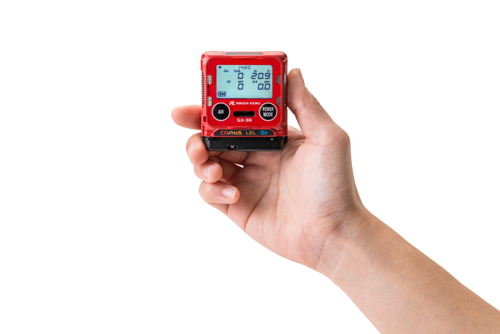
1. The Riken Keiki GX-3R
Riken Keiki has once again done what it is known for as a manufacturer, namely designing the smallest and lightest 4-gas detector in existence. The result? The RKI GX-3R, weighing just 100 grams. For comparison: that is not much heavier than an old Nokia 3310.
The GX-3R also measures 61 x 67 x 27 mm, so the device does not get in the way during work. The GX-3R also runs for up to 25 hours on a single battery charge. Finally, this gas detector is water- and dust-tight to IP66/68, so it can be used in harsh conditions too.
This Japanese design is also produced very efficiently, so the price is certainly not disappointing. If you want to buy a straightforward 4-gas detector without any frills, this one comes highly recommended.
2. The Blackline G6
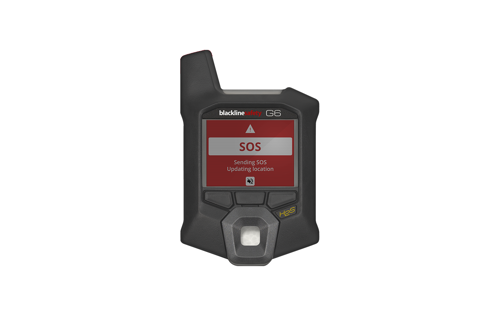
The Blackline G6 is the single-gas detector from the American brand Blackline Safety. What is unique about this device? This gas detector has a 3G/4G connection, so it is always connected to the cloud. That is an enormous advantage over conventional gas detectors that only beep and flash in the event of excessive gas readings.
The Blackline G6 will of course also simply beep and flash to warn the wearer of the device. But in addition, the employee's location can be shared, among other things, and this device records the measured gas readings continuously in the cloud. That way you build up an enormous database of high-risk locations at your site.
If you want to detect more than one gas, take a look at the Blackline G7c.
3. The WatchGas SST4 Micro
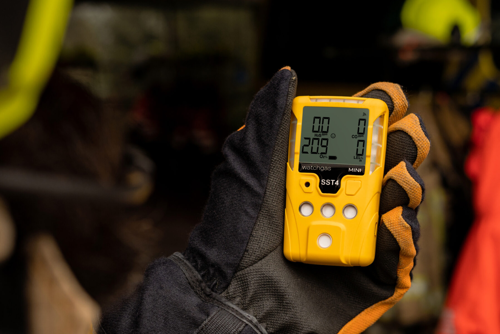
With input from many users, WatchGas has designed new personal gas detectors. In doing so it took account of the five most important points customers want to see when they buy a gas detector, namely:
- The gas must be detected quickly
- A loud and clear alarm in the event of a limit value being exceeded
- A clear and easily readable screen
- Robust design for harsh conditions
- Good software and docking stations
The result: the WatchGas SST4 Micro. A personal 4-gas detector that meets the above requirements.
Want to know more about gas detection?
Would you like to know more about buying or renting a professional gas detector? Our experts will be happy to advise you.
Request advice without obligation below or call us directly on 050-5712124.
📞 Call us or 📧 email info@basystemen.nl
Or use the form below.