You measure formaldehyde to monitor exposure in the workplace and to comply with statutory limit values. Even at low concentrations the substance can cause irritation, and in high doses it is carcinogenic. Reliable measurements are therefore essential in laboratories, industry and construction.
Measuring formaldehyde
Risks, limit values and measuring equipment
Formaldehyde is a substance that occurs in many sectors. From laboratories and livestock farming to building materials and insulation foam. Because formaldehyde can be harmful to health, strict rules apply to exposure in the workplace.
Do you work with formalin, disinfectants or materials that can release formaldehyde? Then measuring formaldehyde is often necessary in order to check whether employees can work safely.
In this article we cover:
- What is formaldehyde
- Where do you encounter formaldehyde?
- Is formaldehyde dangerous?
- Dutch limit values for formaldehyde
- Measuring formaldehyde in 2026
or simply give us a call on: 050-5712124
What is formaldehyde?
Formaldehyde is a colourless gas with a strong, pungent smell. The molecular formula of formaldehyde is HCHO. It is a volatile organic compound (VOC) from the larger chemical group of aldehydes. It is also known as methanal and has CAS number 50-00-0. A solution of 37% formaldehyde in water is called formalin or formol , one of the forms of preserving fluid.
Source: Kenniscentrum Letselpreventie
Is formaldehyde dangerous?
Yes. Formaldehyde can be harmful to health. Especially when people are exposed to it for longer periods or when the concentration in the air becomes too high.
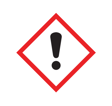
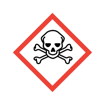
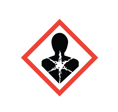
Formaldehyde is classified as a category 1B carcinogen under the CLP Regulation, which means it probably causes lung cancer in humans (nasopharyngeal cancer and myeloid leukaemia). Via various routes formaldehyde can enter the body and cause damage.
Hazard 1. Acute irritation of the eyes and airways
Formaldehyde can cause complaints even at relatively low concentrations. Many people first notice stinging eyes, a burning sensation in the nose or throat irritation. Headaches, coughing or a tight chest can also occur.
These effects can already occur at concentrations you cannot always smell directly. That is why measuring formaldehyde is important, certainly in workplaces where formaldehyde can be released.
Hazard 2. Long-term health effects
On prolonged exposure formaldehyde can cause more serious health problems. According to the RIVM and the Health Council of the Netherlands, formaldehyde is a carcinogenic substance.
Research shows that prolonged exposure can increase the risk of, among other things, cancer of the nose and throat. That is why strict limit values for occupational exposure apply in the Netherlands. At international level, too, formaldehyde is recognised as dangerous in the long term.
The Dutch limit values are set by the Social and Economic Council, which advises on safe exposure levels in the workplace.
Hazard 3. High concentrations in enclosed spaces
In poorly ventilated spaces formaldehyde concentrations can build up. Think of storage areas, laboratories, workshops or new buildings where many materials release formaldehyde.
At higher concentrations complaints can quickly become worse. Employees may then suffer severe irritation of the eyes and airways, nausea or dizziness.
That is why in many sectors it is mandatory to measure formaldehyde whenever there is a chance of exposure. Measurements are carried out, for example, as part of an RI&E (risk inventory and evaluation), occupational hygiene study or ventilation check.
Where do you encounter formaldehyde?
Formaldehyde occurs in many places. Both in industry and in buildings and homes. As a result, exposure can arise in various ways.
In industry, formaldehyde is used in the production of resins, adhesives and plastics. These substances are often found in wood products such as chipboard, MDF and plywood. In factories where these materials are made or processed, formaldehyde can be released into the air.
Formaldehyde is also regularly found in construction and interior finishing. New furniture, floors, insulation materials and adhesives can release small quantities of formaldehyde. This process is also known as off-gassing. As a result, the formaldehyde concentration can be temporarily higher in newly built or recently renovated spaces.
Formaldehyde can also be produced during combustion processes. Examples are:
- wood stoves and open fires
- gas cookers
- cigarette smoke
- candles and incense
- barbecuing or cooking at high temperatures
According to the RIVM, formaldehyde is therefore also regularly found in indoor air.
In some sectors the chance of exposure is particularly high. Think for example of:
- the wood processing industry
- furniture production
- laboratories and hospitals
- mortuaries and pathology
- production of insulation materials
- plastics and resin production
In these working environments it is often necessary to measure formaldehyde in order to check whether employees can work safely and whether the limit values are not being exceeded.
That is why many companies choose to rent a formaldehyde meter, for example for an RI&E (risk inventory and evaluation), occupational hygiene study or ventilation check.
Source: National Institute for Public Health and the Environment
Dutch limit value for formaldehyde
In the Netherlands, statutory limit values apply to exposure to formaldehyde in the workplace. These limit values are set by the SER and are used within occupational health and safety legislation. The current limit values are (March 2026):
- 0.15 mg/m³ (TWA-8 hours) ≈ 0.12 ppm – average exposure over a working day.
- 0.5 mg/m³ (TWA-15 minutes) ≈ 0.4 ppm – maximum short-term peak exposure.
The 8-hour value is used to assess whether employees can work safely during a normal working day. The 15-minute value protects against short-term peaks, for example when opening containers, during laboratory work or when working with resins and adhesives.
Source: SER
or simply give us a call on: 050-5712124
Measuring formaldehyde → suitable measuring equipment
For measuring formaldehyde in the workplace, the Riken Keiki FP-31 formaldehyde meter is currently the most reliable instrument on the market.
Why?
It is not because we at BaSystemen just happen to carry the FP-31 in our range. We carry it for a reason. We also have other gas detectors with an HCHO sensor, but we are unlikely to recommend them.
Many standard electrochemical gas sensors struggle with formaldehyde. They often react extremely strongly to other volatile organic compounds as well. This quickly leads to incorrect readings. Examples are: 150%+ on H2S (hydrogen sulphide), 100%+ on PH3 (phosphine), -20% on NO2 (nitrogen dioxide), and many more.
On top of that, electrochemical sensors need a recovery time of 10-20 minutes to function 'normally' again after exposure to a gas the sensor is cross-sensitive to. A lot of uncertainty, in other words, and we would rather avoid that.
The FP-31 works with a different technique. Instead of a classic electrochemical sensor, the instrument uses colorimetric detection tablets. The meter pumps air over a tablet. If formaldehyde is present, the tablet changes colour. An optical sensor reads this colour change and immediately calculates the formaldehyde concentration in ppm.
The big advantage is that this method is barely affected by cross-sensitivity with other gases. This makes the measurement far more reliable than with many real-time sensors.

The Riken Keiki FP‑31 is the reliable solution for measuring formaldehyde in the workplace. This portable detector measures concentrations from 0 to 0.4 ppm with great accuracy, ideal for checking whether the air complies with the Dutch limit value of 0.15 mg/m³ (TWA‑8h).
Thanks to its advanced colorimetric measuring system, the FP‑31 is virtually insensitive to other VOCs, so you always get reliable results. Its compact design makes the device suitable for laboratories, construction, wood processing and indoor air measurements.
The FP‑31 is available both for rental and for purchase, with fast delivery and ready-to-use calibration. That way you can measure safely and in line with occupational health and safety rules straight away.
Want to know more about measuring formaldehyde?
Still have questions about measuring formaldehyde? Then take a look at the FAQ right at the bottom of the page!
Would you like to know more about buying or renting a professional gas detector? Or do you simply have a question? Our experts will be happy to advise you.
Call us directly on 050-5712124, email info@basystemen.nl , or feel free to use the form below.
Frequently asked questions about formaldehyde [FAQ]
Formaldehyde has a strong, pungent smell that is often described as sharp or chemical. Many people can already detect the smell at around 0.1 ppm.
But beware! Smell is not a reliable indicator of safety.
Formaldehyde can be measured in a number of ways:
Photometric (= real-time)
This is the most reliable real-time measuring method. It gives you immediate insight into the 15-minute TWA, which you can compare with the Dutch guidelines for occupational exposure. The Riken Keiki FP-31 measures with a photometric sensor.
Electrochemical (= real-time)
This is a widely used gas detection sensor, for oxygen, hydrogen sulphide, carbon monoxide and much more besides. For many gases it works well. However, for HCHO this should not be your first choice. That is down to cross-sensitivity and the resulting unreliability of your formaldehyde sensor. Examples of devices that measure formaldehyde with this sensor are: equipment from Ion Science, RAE Systems, Draeger and others.
Passive sampling
There are passive sampling badges specially designed to measure formaldehyde in the air. You wear a badge (usually filled with activated carbon, or another substance that binds HCHO). After a working day you send the badge to a laboratory for analysis. After a few days you receive the measured values. Not real-time, but valuable nonetheless. Sounds complicated? No worries, BaSystemen assists you throughout the entire process. Take a look at the Formaldehyde Badge.
Active air sampling
The same principle as passive air sampling. Now, however, you wear a PAS pump throughout the day, which actively draws air over an activated carbon tube. The pump mimics your breathing while you wear the tube close to the breathing zone. With a clip on your collar, for example. See here what such a measuring set looks like.
Colorimetric detector tubes
Formaldehyde can also be measured with colorimetric detector tubes (also known as detection tubes or Dräger tubes). A tube is connected to a hand pump that draws a fixed volume of air through the tube. When formaldehyde is present in the air, the gas reacts with the reagent in the tube. This produces a colour change in the tube. Quick and simple. But: only a snapshot (so not continuous), very limited accuracy compared with specialised meters (often a margin of error of as much as 25%), and only one measurement per tube.
In 2026, the limit value in the Netherlands is 0.15 mg/m³ (≈ 0.12 ppm) as an 8-hour average, and 0.5 mg/m³ (≈ 0.4 ppm) as a 15-minute average.
PID sensors detect many VOCs, and in real time too. So a great solution, surely? No, unfortunately formaldehyde is not that easy to measure. Formaldehyde responds relatively weakly to a PID lamp. That is why other techniques, such as colorimetric or dedicated HCHO sensors, are often used for accurate measurements.
How is that?
Formaldehyde has an ionisation potential of 10.87. A PID lamp has to be stronger than the ionisation potential in order to detect the gas.
There are generally three types of PID lamp on the market.
- 9.8 eV -> lower than 10.87, so it does not detect HCHO.
- 10.6 eV -> lower than 10.87, so it does not detect HCHO.
- 11.7 -> In theory this lamp can detect HCHO. But an 11.7 lamp is so strong that it damages itself and therefore often has a warranty period of only two months. On top of that, an 11.7 lamp detects all gases with an ionisation potential lower than 11.7 at the same time. The result? Enormous interference in your measurement result from other gases in the surroundings.
You need to understand PIDs properly before you measure with them. Hopefully this short text has made that a little clearer. Want to know more about how a PID works? Then you can always take a look at our article: 'How does a PID work?'
So equipment such as a MiniRAE 3000, Ion Science Tiger or another PID is only an option if you know all the ins and outs.
So what is more reliable for measuring HCHO?
Colorimetric and/or passive / active air sampling.
Author: Ivar Bos
Published: February 2026